
Stay Updated
Deep dive into vehicle transport strategies,
industry standards, and best practices.
![[background image] image of logistics hub (for a trucking company)](https://cdn.prod.website-files.com/6a395d194d74372bfb78db0a/6a7cf9f110b177c2bffa8818_c2af5780-5f98-4ddf-81c4-14ebbdc0d138.avif)
Electric Vehicle Transport Guide
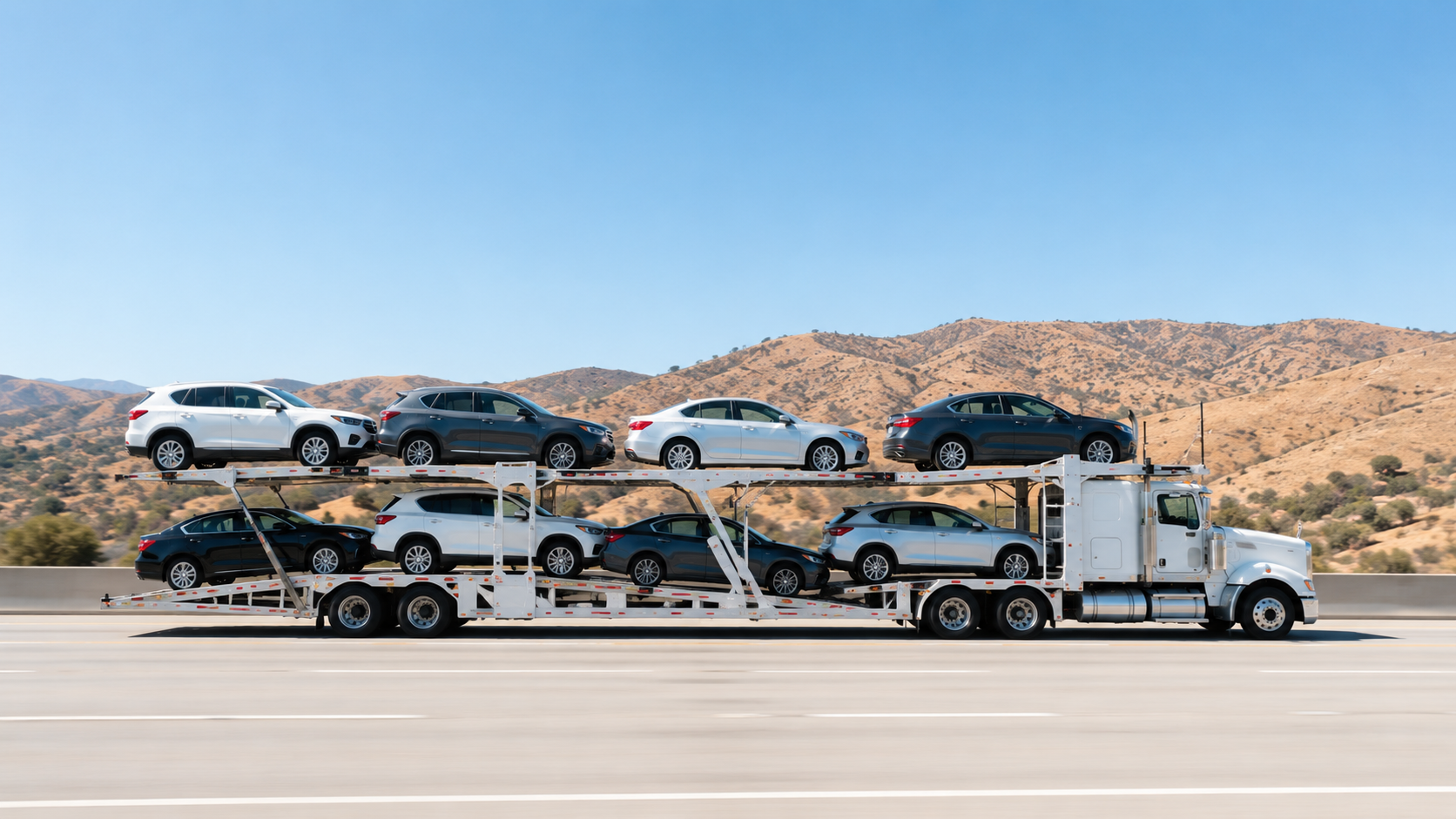
The rapid rise of electric vehicles (EVs) has introduced unique operational challenges to the vehicle shipping industry. While EVs offer incredible torque and zero tailpipe emissions, their heavy battery packs alter standard auto-hauling math.
An electric SUV can weigh anywhere from 20% to 35% more than a comparable gas-powered vehicle. Because federal law limits commercial auto haulers to a gross vehicle weight of 80,000 pounds, carrying an entire trailer of EVs often means transport trucks can legally carry only 7 or 8 cars instead of their usual 9 or 10.
Additionally, carriers enforce battery safety standards during transit. Auto haulers ask EV owners to maintain a battery charge level between 20% and 50% upon pickup. This keeps the battery light and safe while ensuring there is plenty of power to drive the car on and off the trailer decks during transit stops. Working with haulers certified in electric vehicle shipping ensures your EV is transported in accordance with all safety regulations.
Industry Comment: "EVs require a completely different loading arrangement. Dispatchers have to calculate axle weights down to the pound so the truck doesn't get flagged for an overweight violation at a state weigh station."

![[background image] image of logistics hub (for a trucking company)](https://cdn.prod.website-files.com/6a395d194d74372bfb78db0a/6a7ce7ca27b8db87f3c31dbd_78bb73c0-593f-490f-bf53-8c06532114c8.png)
![[background image] topdown photo of a desk with a laptop and a plant (for a moving & storage company)](https://cdn.prod.website-files.com/6a395d194d74372bfb78db0a/6a7cfdb08e7ae551a92ffb20_49c9f3f9-920a-46c0-88c8-9031f015bf6d.avif)
Ship your car, stress-free
Instant quotes. Fast pickup. Reliable delivery. Book your vehicle transport in minutes—no commitment until your driver is assigned.